
Why Some Businesses Show Up in ChatGPT, and Others Don't
Why Some Businesses Show Up in ChatGPT, and Others Don't
Try this sometime. Open ChatGPT, or Perplexity, or Google's AI Overview, and ask the exact question one of your customers might ask. "Who's a good [your industry] in [your city]?"
You'll get an answer back in a few sentences, usually naming two or three businesses. Maybe you're one of them. Maybe you're not, and someone else is standing in the spot you didn't know existed.
That small test tells you something most businesses have no idea about right now: whether they're part of the conversation when AI tools are asked about their category, or whether they've quietly become invisible to it.
The Way People Search Has Changed
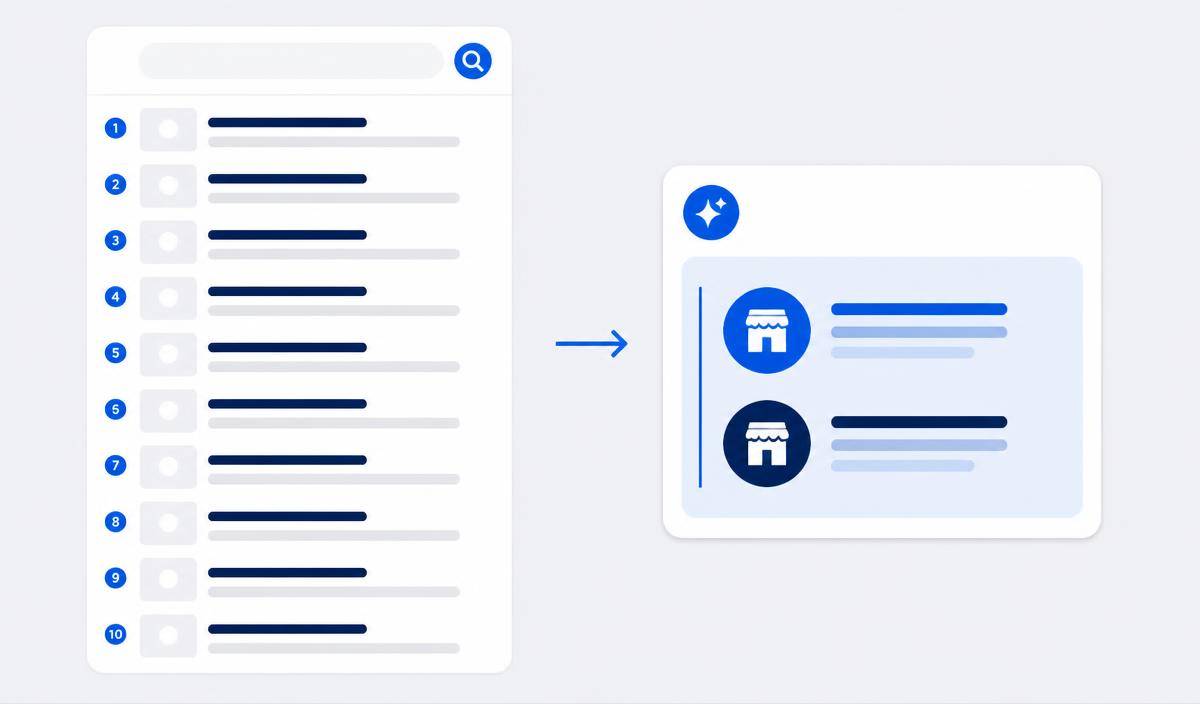
For most of the last twenty years, being found online meant showing up on a page of search results. Position 3, position 7, still visible, still clickable, because people scrolled.
That's not really how search works anymore for a growing share of people. When someone asks an AI tool a question, they don't get a page of links to compare. They get an answer, built from a small handful of sources the model decided were trustworthy enough to summarize and repeat. More than half of Google searches now end without a click at all. The person got their answer and moved on, and your website was never part of it.
This isn't a future trend to keep an eye on. It's already how a growing number of people find businesses, right now, today.
Ranking and Being Recommended Are Not the Same Thing
Here's the distinction worth understanding. Ranking is about earning a position on a list. Being recommended is about getting named, specifically, as one of the two or three things an AI model chose to say out loud.
There's no scrolling past you to find someone else in that second scenario. Either you're in the short list, or you're simply not part of the answer.
That's a much smaller room than search results ever were, and it explains why a business can have a great website and still lose ground here. The businesses showing up in AI answers aren't necessarily the ones ranking highest on Google. They're the ones the AI trusts enough to mention.
What Actually Earns That Trust
If you've seen terms like SEO, GEO, and AEO floating around, the short version is this: they're related, not competing. SEO gets a business on the list. AEO gets it to a direct, quotable answer. GEO gets AI to name it when building a response to someone's question. Good SEO is still the foundation everything else gets built on. We broke this down in more detail in SEO Is Evolving: What You Actually Need to Know About AEO and GEO.
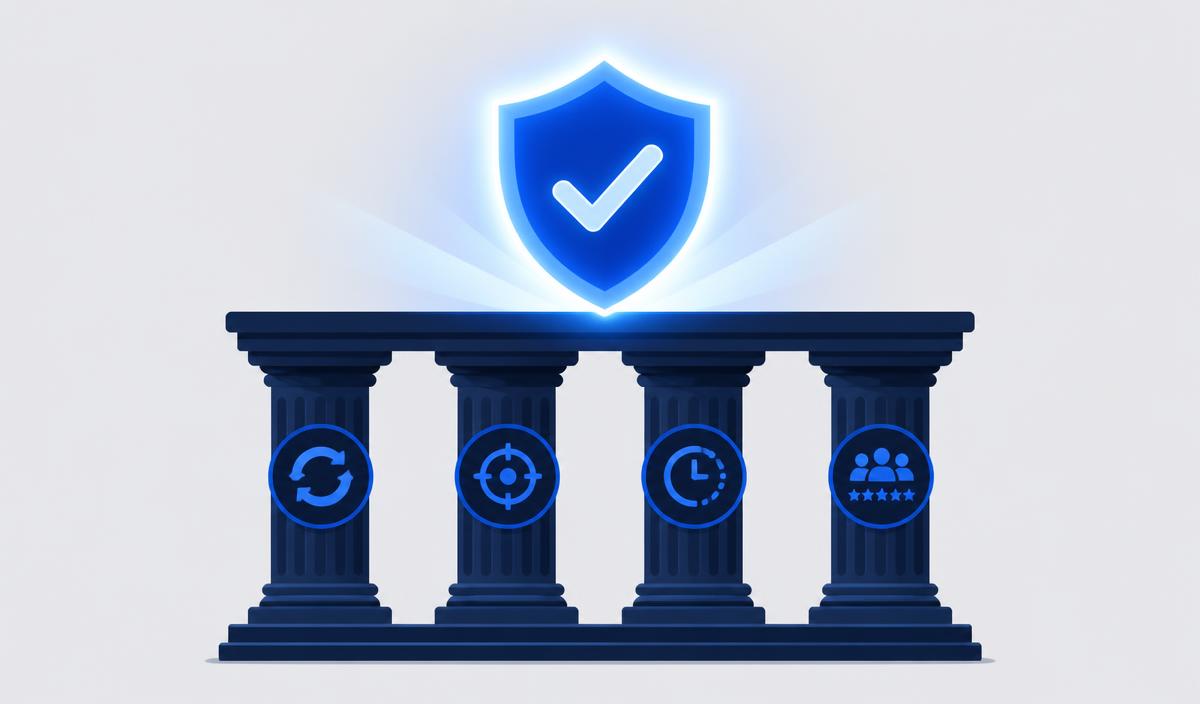
What earns that AI trust specifically comes down to a few concrete, unglamorous things:
- Consistency. Your business name, services, and location need to match everywhere they appear: your website, your Google Business Profile, directory listings, anywhere you're mentioned. Scattered or conflicting information reads as unreliable to a model trying to verify facts before repeating them.
- Specificity. A homepage that says "comprehensive solutions for your industry" tells a person your general vibe. It tells an AI model almost nothing usable. Specific, plain statements about what you actually do get extracted and repeated. Vague branding language gets skipped.
- Freshness. Sources cited by AI tools skew toward content that's been updated recently. A site that hasn't changed in two years is competing against ones that have.
- Third-party validation. Reviews and outside mentions matter, because AI tools weigh what other sources say about a business, not just what the business says about itself.
None of this requires reinventing your marketing. It requires treating your online presence as a set of verifiable facts, not just a brand people are supposed to like.
The Blind Spot Most Reporting Has Right Now
Most businesses are still watching the same two numbers they've always watched: website traffic and search ranking. Those aren't wrong to track. They're just no longer the whole picture.
Someone can ask ChatGPT a question, get a competitor's name in the answer, and act on it, and that entire interaction never touches your website analytics. No click, no visit, no data point telling you it happened. Your business could be losing leads to AI recommendations you have zero visibility into, simply because the metrics that would show you aren't in your usual dashboard yet.
This isn't cause for alarm. It's a blind spot worth knowing about before it costs you something you can't see.
Why This Is Worth Acting On Now, Not Eventually
AI visibility compounds the same way domain authority always has. Businesses that establish consistent, well-structured, trusted information early tend to hold that position, because the trust these models build reinforces itself over time rather than resetting the competition daily.
That means the gap between businesses that are visible in AI search and businesses that aren't isn't staying still. It's widening, in both directions, for every day that passes without anyone looking into it. This isn't about creating urgency for the sake of it. It's just an accurate read on how visibility has always worked, in every era of search.
How to Find Out Where You Actually Stand
You don't need to become fluent in SEO, AEO, and GEO to respond to any of this well. You need one clear, honest answer to one question: is your business currently part of the conversation when AI tools are asked about your category, or not?
That's exactly what the Signature Visibility Audit is built to answer. It's a free check that evaluates your website the way AI search tools actually read it, and gives you:
- An overall visibility score, benchmarking where your business stands right now
- A breakdown of your SEO health and AI search readiness specifically
- Three to five prioritized, specific things you can fix right away, not generic advice
No guessing, no credit card, no commitment beyond curiosity about where you actually stand. If you want to see how the process works end to end first, here's how it works.
Ready to Transform Your Business?
Schedule a free consultation to discover how AI automation can save you time and grow your revenue.
Book a Consultation